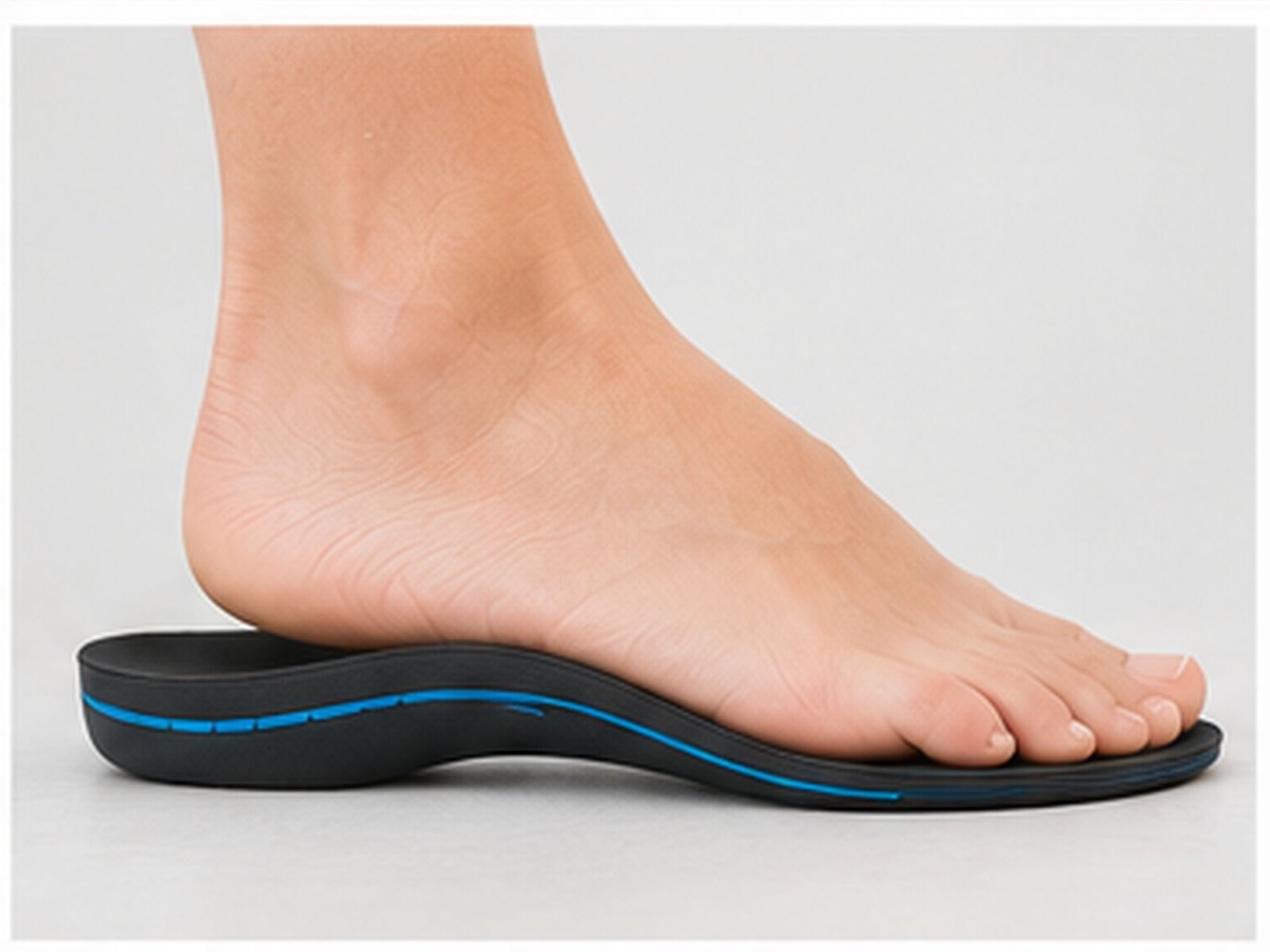
Flat Feet Treatment in Goodyear, AZ
Flat feet do not always cause problems, but when they do, the pain can be relentless. Heel pain. Arch fatigue. Knee and lower back pain that traces all the way down to how your feet load. Foot Envy treats flat feet conservatively first, with custom orthotics, supportive bracing, and footwear changes that take the daily abuse off your feet.
Dr. Craig Udall, DPM is the West Valley's specialist in lower-extremity biomechanics, and that is exactly what flat feet treatment depends on. TRICARE and veteran friendly. Same-week visits. Se habla español.
What Are Flat Feet?
Flat feet, known medically as pes planus, is a condition where the arch of the foot is reduced or absent. When you stand, the inside of the foot makes contact with the ground that would normally be lifted. About 20 to 30 percent of adults have some degree of flat feet, but only a portion of them have problems related to it. Many people live their entire lives with flat feet and never have foot pain.
Flat feet come in three main categories, and the difference matters for treatment.
Flexible flat feet
The arch is visible when you sit or stand on your toes, but it flattens when you put weight on the foot. This is the most common type, and it responds best to conservative care.
Rigid flat feet
The arch is absent regardless of position. This is less common and often signals an underlying structural or arthritic issue that may need a more involved treatment approach.
Adult-acquired flatfoot deformity (AAFD)
This is what happens when an adult develops flat feet over time, usually because of a tendon problem called posterior tibial tendon dysfunction (PTTD). The posterior tibial tendon supports the arch, and when it weakens or tears, the arch collapses. AAFD progresses if untreated and is the type of flat feet that needs prompt evaluation.
Symptoms of Flat Feet
Many people with flat feet have no symptoms at all. For those who do, common symptoms include:
- Pain along the inside of the foot or arch.
- Heel pain (flat feet and plantar fasciitis are closely related).
- Foot fatigue after standing or walking for long stretches.
- Swelling along the inside of the ankle.
- Pain that travels up to the knees, hips, or lower back from altered gait.
- Difficulty standing on tiptoes or pushing off the foot during walking.
- Shoes that wear down on the inside edge faster than the outside.
When Do Flat Feet Need Treatment?
Functional flat feet that do not cause symptoms do not need treatment. We say that clearly because a lot of patients are told they need treatment just because they have flat feet, and that is not always true.
- Flat feet become a real problem when the foot structure is collapsing in a way that causes:
- Overpronation that strains the soft tissues of the foot, ankle, knee, and hip.
- Plantar fasciitis from the constant pulling on the plantar fascia.
- Posterior tibial tendon dysfunction, the most common cause of adult-acquired flat feet.
- Bunions and hammer toes from altered gait and forefoot loading.
- Knee and lower back pain that traces back to how the foot loads under gait.
If your flat feet are causing pain or affecting your activity, treatment helps. If they are not, watchful waiting is often the right answer.
What Causes Flat Feet?
Genetics and inherited foot structure
This is the biggest factor. People who have always had flat feet typically inherited the foot shape from their parents.
Childhood development
All babies are born with flat feet. The arch usually develops by age 6 to 10. Some kids never develop a typical arch and grow into adults with flexible flat feet.
Posterior tibial tendon dysfunction (PTTD)
This is the most common cause of adult-acquired flat feet. The posterior tibial tendon runs along the inside of the ankle and supports the arch. When it weakens, gets inflamed, or tears, the arch collapses. PTTD progresses if untreated, which is why early evaluation matters.
Foot injury or ruptured tendons
Trauma to the foot or ankle can lead to acquired flat feet.
Arthritis
Rheumatoid arthritis and other inflammatory conditions can damage the joints that support the arch.
Obesity and pregnancy
Both add load to the arch and can cause it to drop, sometimes permanently.
Long-term standing and high-impact activity
Daily impact on hard surfaces, especially while carrying heavy loads, accelerates flat feet in patients who are already structurally prone. This is one of the reasons flat feet are so common in the active-duty military population, where boot-and-load conditions push the arch hard for years at a time.
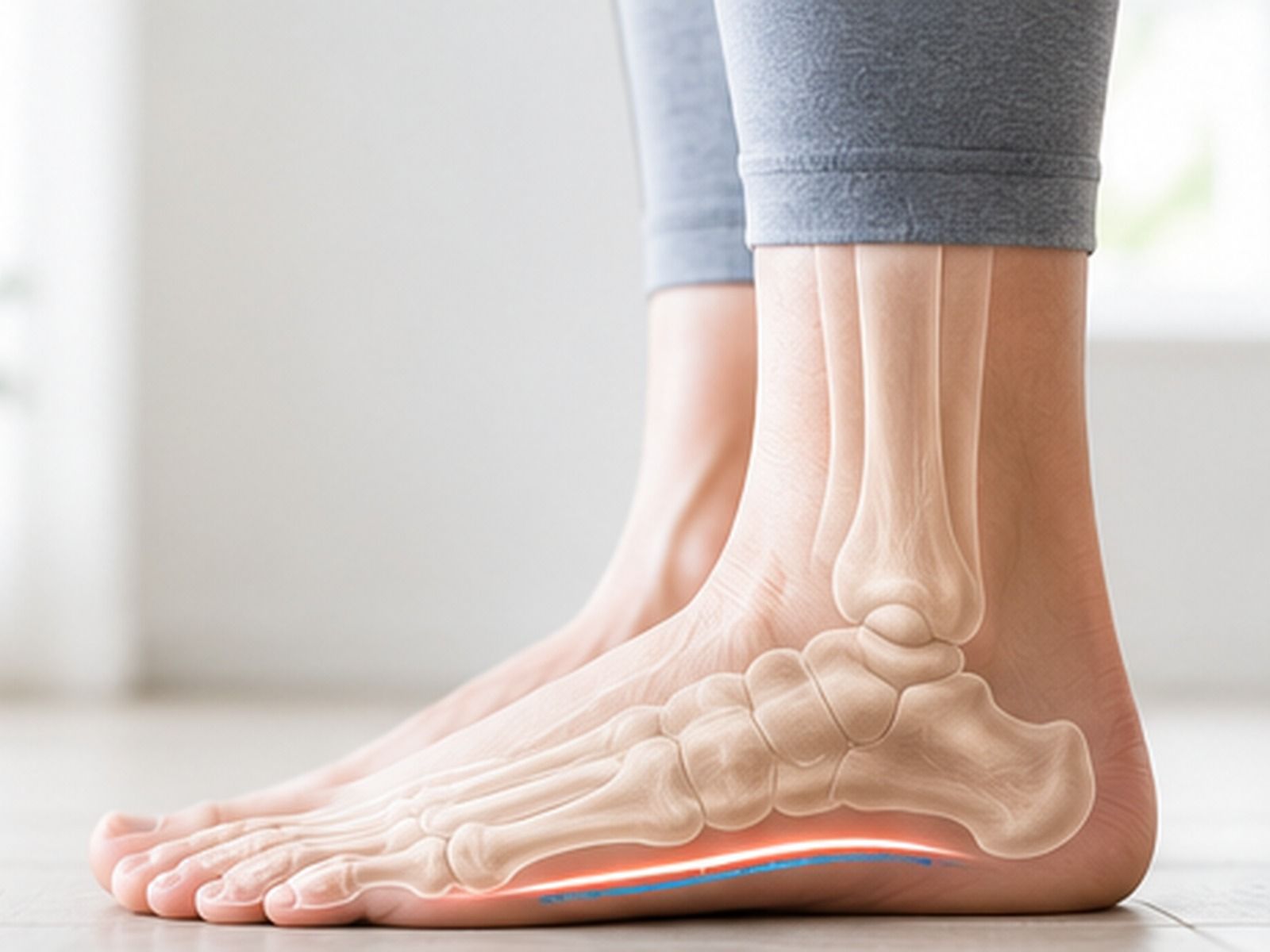
How We Treat Flat Feet: Our Conservative-First Approach
For nearly every patient with symptomatic flat feet, our treatment plan starts at the bottom rung and moves up only when needed. The vast majority of patients get full relief without ever reaching the surgical rung.
Why Patients See Dr. Udall for Flat Feet
Flat feet are squarely in Dr. Udall's specialty. His expertise in custom orthotics and lower-extremity biomechanics is directly relevant, because flat feet treatment is fundamentally about correcting how the foot loads during gait. The right orthotic, paired with the right bracing and strengthening when needed, can take a painful flat foot and make it a comfortable one.
He is board certified, fellowship trained, and a member of the American Podiatric Medical Association (APMA) and the American College of Foot and Ankle Surgeons (ACFAS). He has hospital privileges at St. Joseph's Westgate Medical Center for the rare cases that require surgical reconstruction.
Flat Feet, Active-Duty Service Members, and Veterans
Flat feet are one of the most common foot conditions in the active-duty military and veteran population. The combination of combat boots, long days on hard surfaces, heavy load carriage, and constant impact takes a real toll on a foot structure that is already prone to overpronation. For our patients near Luke Air Force Base, this is a daily reality.
Here is what active-duty members, veterans, and military families should know about custom orthotics and flat feet care.
Active-duty service members
If you have a diagnosed condition related to flat feet, such as plantar fasciitis, posterior tibial tendon dysfunction, or chronic foot or ankle pain, the standard pathway is to receive custom orthotics through your military treatment facility (MTF) podiatry service. Most MTFs prescribe and fit orthotics for diagnosed conditions. If you need a civilian consultation or have been referred out for specialty care, Foot Envy accepts TRICARE patients and can work within that pathway.
Military family members and dependents
Dependents covered under TRICARE generally have more direct access to civilian podiatry care. We see TRICARE family members at Foot Envy, and most of our care, including custom orthotics for flat feet, is typically covered under TRICARE plans.
Veterans with service-connected conditions
If your flat feet are service-connected, or if you have a service-connected condition related to them, you may qualify for custom orthotics through your VA health care benefits. The VA pathway typically involves an evaluation at your VA medical center or a referral through the VA Community Care Network. For veterans without service-connected coverage, we see patients at Foot Envy under standard insurance, Medicare, or self-pay.
A note about VA disability ratings
Flat feet (pes planus) can be a rated service-connected condition for veterans whose flat feet were caused or aggravated by their military service. The VA rates flat feet under diagnostic code 5276, with ratings ranging from 0 percent to 50 percent depending on severity, whether the condition is unilateral or bilateral, and how much it limits function. The VA determines the rating. We do not, but if you need a private medical evaluation for documentation, a second opinion, or care outside the VA system, we can help.
The bottom line
Whether you are active-duty, a family member, a retired service member, or a veteran without service-connected coverage, we want you to know your options. Call us at
623-335-4017 and we will walk through how to use your benefits and what we can do for you.
Custom Orthotics: The Central Treatment for Flat Feet
Custom orthotics are the most important piece of treatment for most patients with symptomatic flat feet. Drugstore arch supports can help mild cases, but they are mass-produced for an average foot. A real flat feet treatment plan needs an orthotic built specifically for your foot, your gait, and the severity of your condition.
Our orthotic process for flat feet starts with a full lower-extremity exam, includes gait analysis to see what your foot actually does under load, and uses casting or 3D scanning to capture an exact impression. The orthotic is then built by a specialty lab to Dr. Udall's prescription. The result is an orthotic that supports the medial arch precisely where it needs support, controls overpronation through specific post angles, and protects the posterior tibial tendon from further strain.
For most patients with flat feet pain, the right custom orthotic is the single biggest piece of treatment that exists for the condition.
The Best Shoes for Flat Feet
The short version: structured shoes with real arch support, a firm heel counter that does not collapse when pressed, and a stable, supportive midsole. For running and athletic shoes specifically, look for the "motion control" or "stability" categories. Brands that consistently make flat-feet-friendly shoes include Brooks, ASICS, New Balance, Hoka, and Saucony, though the specific model matters more than the brand.
What to avoid: flat, flexible shoes that fold easily in the middle, minimalist shoes, ballet flats, worn-out flip-flops, and any shoe that loses its structure within a few months.
We give you specific shoe recommendations during your visit based on what you actually wear and where you spend the most time on your feet.
Frequently Asked Questions About Flat Feet
Will Surgery Fix Flat Feet?
For most patients, conservative care is enough. For severe cases of adult-acquired flatfoot or rigid flat feet that are significantly limiting function despite consistent conservative care, surgery is an option. It is real surgery with real recovery, and it is reserved for cases where the alternative is permanent pain or lost function.
If surgery is on the table for you, Dr. Udall walks through the specific procedure recommended, what recovery looks like, and what the realistic outcome is. The decision is yours, with our honest input. For most flat feet patients, that decision never has to be made.
Do all flat feet need treatment?
No. Many people have flat feet and no symptoms. Treatment is for flat feet that are causing pain, limiting activity, or part of a progressive condition like posterior tibial tendon dysfunction. Asymptomatic flat feet usually do not need anything beyond good shoes.
Can flat feet be cured?
The foot structure cannot be reversed without surgery, but flat feet symptoms can almost always be controlled with conservative care. For most patients, the goal is a comfortable foot, not a different foot.
Can you join the military with flat feet?
Generally, yes, although it depends on severity and the specific branch's standards. Most branches allow flat feet that are flexible and not painful. Severe or symptomatic flat feet may disqualify a candidate. The MEPS evaluation makes that call. If you need a private podiatric evaluation before MEPS, we can help.
What is the VA disability rating for flat feet?
The VA rates flat feet under diagnostic code 5276, with ratings ranging from 0 percent to 50 percent depending on severity, whether the condition is unilateral or bilateral, and how much it limits function. The VA determines the rating, not us, but a thorough medical evaluation supports the claim. We can provide that evaluation for patients who need it for documentation or a second opinion.
Do custom orthotics help flat feet?
Yes, often substantially. For most flat feet patients with pain, custom orthotics are the central piece of the treatment plan. They support the arch, control overpronation, and take the daily abuse off the soft tissues.
Does TRICARE cover flat feet treatment at your office?
Yes, we accept TRICARE patients. Coverage for custom orthotics and other treatments depends on your specific TRICARE plan and whether the condition is medically necessary. We verify benefits before any work starts.
Does Medicare cover flat feet treatment?
Medicare covers the exam and most treatments. Custom orthotic coverage varies and is generally tied to specific conditions (like diabetes) rather than flat feet alone. We can check your specific plan when you call.
What is posterior tibial tendon dysfunction?
PTTD is the most common cause of adult-acquired flat feet. The posterior tibial tendon runs along the inside of the ankle and supports the arch. When it weakens, gets inflamed, or tears, the arch collapses. Early diagnosis matters because PTTD progresses if untreated.
¿Habla español?
Sí. Dr. Udall y nuestro equipo hablan español con fluidez. Llame al 623-335-4017 para programar una cita.
Related Flat Foot Conditions We Treat
Custom Orthotics
Prescription-grade custom foot orthotics designed by Dr. Udall, the West Valley’s dedicated specialist in lower-extremity biomechanics.
Hammer Toes
In-Office Treatment
Conservative care first, with a minimally-invasive in-office procedure for flexible hammer toes when needed. Less downtime than traditional surgery.
Heel Pain &
Plantar Fasciitis
The most common foot pain we see — and the most treatable. Real relief through stretching, custom orthotics, and conservative care.
Drop Foot
Diagnosis, AFO bracing, and rehabilitative care for drop foot. We figure out the cause and build a plan — conservative care first.
Bunions
From mild bunions to advanced cases, we start with conservative care — footwear, padding, custom orthotics — and only consider surgery when nothing else has worked.
Foot & Ankle Pain
Not sure what’s wrong? Our foot pain triage page helps you identify what you’re feeling — top-of-foot, ball-of-foot, arch, or ankle pain.
Book Your Flat Feet Evaluation
The first step is a real exam. Dr. Udall will examine your foot structure, watch you walk, identify whether your flat feet are flexible or rigid, and rule out posterior tibial tendon dysfunction. Most patients leave their first visit with a clear plan and the first rungs of the conservative ladder in motion.