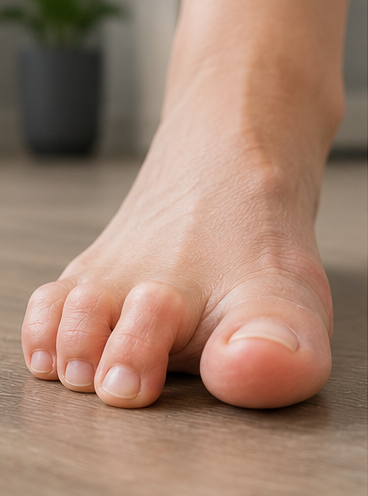
Hammer Toe Treatment in Goodyear, AZ
Most hammer toes can be treated without hospital surgery. Foot Envy starts with the simple stuff like footwear, padding, taping, and custom orthotics. When a flexible hammer toe needs more,
Dr. Craig Udall, DPM performs a minimally invasive in-office procedure that gets you back to your life faster than traditional surgery. Same-week visits. Se habla español.
What Is a Hammer Toe?
A hammer toe is a deformity in one of the smaller toes. The middle joint of the toe bends downward and stays bent, giving the toe an inverted V shape. Hammer toes most often affect the second, third, or fourth toes, and they tend to worsen over time if nothing is done.
There are two main types, and which one you have changes the treatment a lot.
Flexible hammer toe
The joint is bent, but you can still straighten the toe out manually, or it relaxes when you wiggle it. Flexible hammer toes are the easier kind to treat. They respond well to conservative care, and when a procedure is needed, the in-office, minimally invasive route is usually an option.
Rigid hammer toe
The joint has stiffened to the point where you cannot straighten it. The bone and soft tissue have remodeled around the bent position. Rigid hammer toes typically require a more involved surgical correction.
Catching a hammer toe while it is still flexible is one of the most important things you can do for your long-term foot health. The sooner you come in, the simpler the fix.
Symptoms of a Hammer Toe
The most obvious symptom is the visible bend in the toe. Beyond that,
common symptoms include:
- A painful corn or callus on top of the bent joint, where the toe rubs against the inside of your shoe.
- Pain when wearing closed-toe shoes, especially shoes with a narrow toe box.
- A sore spot on the ball of the foot just under the affected toe, because the bend changes how weight loads across the front of the foot.
- Difficulty finding shoes that fit comfortably.
- Inflammation, redness, or swelling around the joint.
In more advanced cases, an open sore or ulcer on top of the joint, which is more common in diabetic patients and is a reason to come in right away.
What Causes a Hammer Toe?
Most patients have more than one cause working at the same time. Here are the most common ones we see at Foot Envy.
Genetics and foot structure
If your parents had hammer toes, your odds go up. Certain foot shapes are mechanically more prone to developing them, especially long second toes and high-arched feet.
Tight, narrow, or high-heeled shoes
Shoes that squeeze the toes into a bent position over time are a major cause. Decades of pointy-toed dress shoes or high heels can do real damage to toe alignment.
Muscle and tendon imbalance
When one set of tendons pulls harder than the other, the joint sits in a bent position permanently. This is the underlying mechanical issue that the in-office procedure corrects.
Injury
A toe that has been broken, jammed, or dislocated can develop a hammer toe later as the joint heals into a bent position.
Arthritis and diabetes
Conditions that affect joint structure or nerve control can lead to hammer toes over time. Diabetic patients in particular should not delay treatment, because a hammer toe with a corn or open sore can become a serious infection risk.
How We Treat Hammer Toes:
Our Conservative-First Approach
For nearly every patient with a hammer toe, our treatment plan starts at the bottom rung and moves up only when needed. The earlier you come in, the more often the lower rungs are enough.
1. Footwear changes and at-home care
The first thing we look at is your shoes. A shoe with a wider toe box and no pressure on the bent joint can resolve mild discomfort by itself. We also walk you through specific stretches and toe exercises that keep the joint mobile while the soft tissue around it has a chance to settle down.
2. Taping, splinting, and padding
If footwear changes are not enough, we add support. Taping pulls the toe back into a more neutral position during the day. Splints work the same way over longer stretches. Padding takes the pressure off the corn or callus on top of the joint and gives the irritated skin time to heal. For many patients with mild to moderate flexible hammer toes, this rung is the entire treatment plan.
3. Custom orthotics
Custom orthotics for hammer toes do two things. They support the arch and front of the foot so weight loads correctly across the metatarsals, which reduces the pull on the toe. And they often include a metatarsal pad that lifts the load away from the painful spot under the ball of the foot. Learn more about our custom orthotics.
4. The in-office minimally invasive procedure
For flexible hammer toes that have not responded to conservative care, this is where Foot Envy stands apart from most West Valley podiatry practices. Dr. Udall performs an in-office procedure under local anesthesia that releases the tight tendon causing the toe to bend. The toe straightens. The procedure typically takes under an hour. You walk out of the office on your own that day in a post-procedure shoe.
Most patients return to daily activity in two to four weeks instead of the two to three months recovery that usually comes with traditional hospital hammer toe surgery.
5. Hospital-based surgical correction
For rigid hammer toes, where the joint has stiffened and the bone has remodeled, a more involved surgical correction is sometimes needed. Dr. Udall is fellowship trained to perform it and has hospital privileges at St. Joseph's Westgate Medical Center. This is the last rung, not the first.
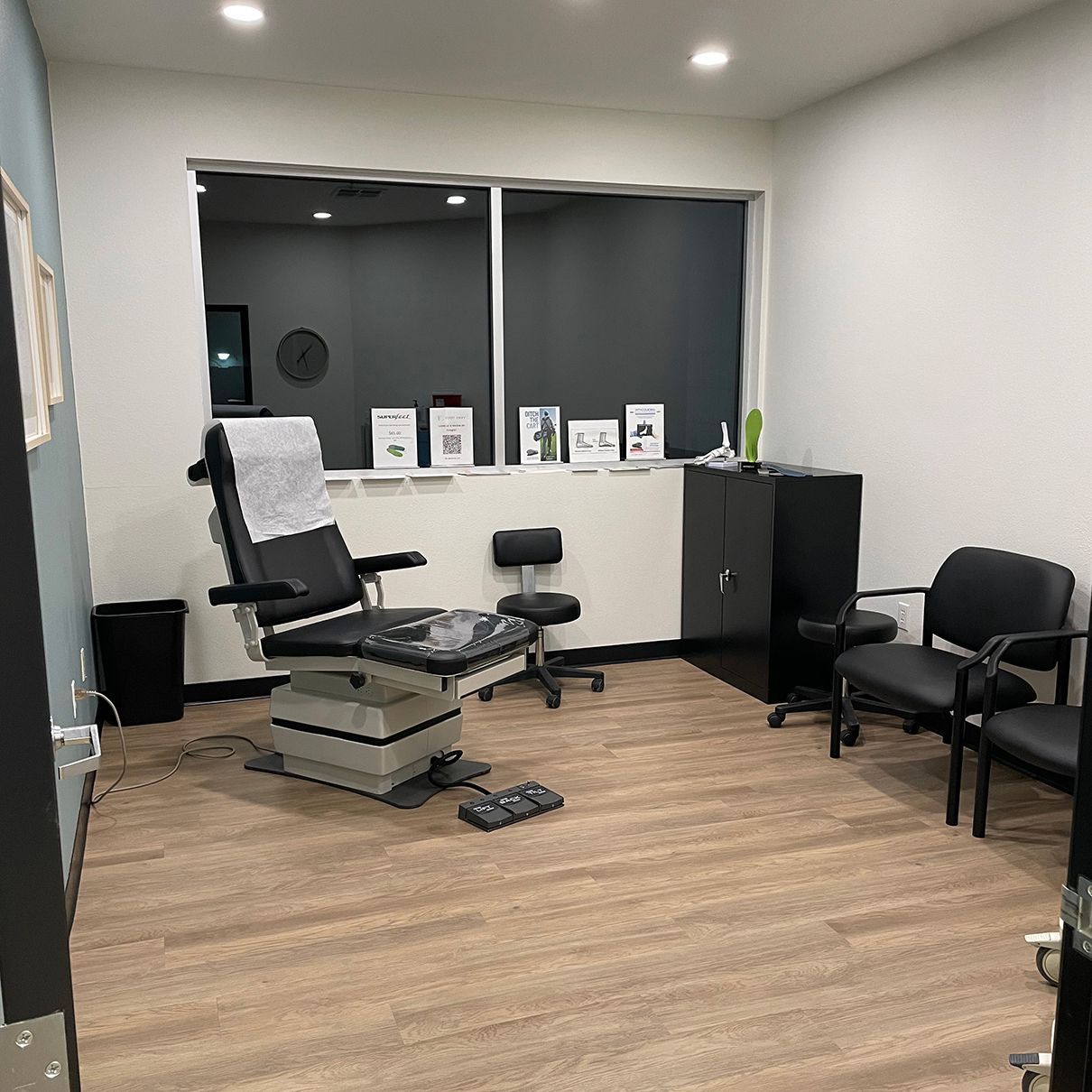
The In-Office Hammer Toe Procedure, Step by Step
This is the part most patients want to understand before they decide. Here is what an in-office flexible hammer toe procedure at Foot Envy actually looks like.
Why Patients See Dr. Udall for Hammer Toes
Most podiatry practices in the West Valley treat hammer toes the same way most podiatrists in the country do. Conservative care for mild cases, hospital surgery for everything else. Foot Envy is different on the back end of that ladder.
For flexible hammer toes that need more than conservative care, Dr. Udall performs a minimally invasive procedure right in our Goodyear office. No hospital. No general anesthesia. Significantly less downtime than traditional hammer toe surgery. For a lot of patients, this is the difference between getting the procedure done now and putting it off for years because they cannot take a month off work for hospital recovery.
Dr. Udall is board certified, fellowship trained, and a member of the American Podiatric Medical Association (APMA) and the American College of Foot and Ankle Surgeons (ACFAS). He has been treating hammer toes in the West Valley since 2017.
Hammer Toe vs. Bunion vs. Mallet Toe vs. Claw Toe
It is easy to confuse these four conditions, especially because they often show up together. Here is how to tell them apart.
Hammer toe
The middle joint of the toe bends downward. The tip of the toe points down toward the floor.
Mallet toe
The end joint of the toe (closest to the nail) bends downward. The middle joint stays straight.
Claw toe
Both the middle joint and the end joint bend downward, and the joint where the toe meets the foot bends upward. The whole toe takes on a claw-like shape.
Bunion
A bony bump at the base of the big toe, where the big toe drifts toward the second toe. Hammer toes often develop alongside bunions because the displaced big toe puts extra pressure on the toes next to it.
Learn more about bunion treatment.
Will My Hammer Toe Get Worse Over Time?
Usually, yes. A hammer toe that is left alone typically progresses from mild flexible (easy to fix) to severe flexible (still fixable but harder) to rigid (requires more involved surgery). Catching it early is the single biggest thing you can do for your long-term outcome.
The progression timeline varies. Some patients live with a mild hammer toe for decades with little change. Others see real progression within a year or two, especially if they keep wearing the same shoes that caused it in the first place. Diabetic patients in particular should not wait, because a hammer toe with a corn or open sore can become a serious infection risk.
If you have noticed a bend in your toe that was not there before, or pain in a toe that has bent over time, getting evaluated now will almost always give you more options than waiting will.
Frequently Asked Questions About Hammer Toes
Can a hammer toe be fixed without surgery?
For most patients with a flexible hammer toe, yes. Footwear changes, taping, splinting, padding, and custom orthotics resolve a significant percentage of mild and moderate cases. The procedure becomes the question only when conservative care is not enough.
What is the difference between the in-office procedure and traditional surgery?
The in-office procedure happens in our Goodyear office under local anesthesia. There is no hospital, no general anesthesia, and recovery is usually two to four weeks. Traditional hammer toe surgery is typically done in a hospital, involves a longer recovery period, and may include hardware in the toe.
Will my hammer toe come back after the procedure?
The corrected toe usually stays corrected, as long as the underlying causes are addressed. That means continuing to wear shoes with adequate toe room and using custom orthotics if your gait or foot structure was part of the original problem. Patients who go straight back into narrow, pointy shoes can re-develop the issue.
Does insurance cover hammer toe treatment?
Yes, most plans cover medically necessary hammer toe treatment. We verify your benefits before any work starts so you know what your out-of-pocket cost will be. We accept Medicare and most major insurance plans.
How do I know if my hammer toe is flexible or rigid?
The simplest test is whether you can straighten the toe by hand. If you can, it is likely flexible. If it is locked in place, it is likely rigid. The definitive answer comes from an in-office exam.
Can hammer toes be prevented?
Often, yes, especially if you have a family history. Wearing shoes with a wide toe box, avoiding long stretches in high heels or pointy shoes, and getting evaluated as soon as a bend in the toe shows up are the most effective things you can do.
Is the in-office procedure painful?
The area is fully numbed with local anesthesia before any work starts. Most patients describe mild soreness for a few days afterward, easily managed with over-the-counter pain medication. We send you home with clear post-procedure instructions and a plan for the first few days.
¿Habla español?
Sí. Dr. Udall y nuestro equipo hablan español con fluidez. Llame al 623-335-4017 para programar una cita.
Hammer Toe Related Conditions We Treat
Custom Orthotics
Prescription-grade custom foot orthotics designed by Dr. Udall, the West Valley’s dedicated specialist in lower-extremity biomechanics.
Foot & Ankle Pain
Not sure what’s wrong? Our foot pain triage page helps you identify what you’re feeling — top-of-foot, ball-of-foot, arch, or ankle pain.
Heel Pain &
Plantar Fasciitis
The most common foot pain we see — and the most treatable. Real relief through stretching, custom orthotics, and conservative care.
Ingrown Toenails
Same-week relief for painful or infected ingrown toenails. Permanent solutions, gentle technique, and we’ll get you out of pain fast.
Bunions
From mild bunions to advanced cases, we start with conservative care — footwear, padding, custom orthotics — and only consider surgery when nothing else has worked.
Book Your Hammer Toe Consultation
The first step is a real exam. Dr. Udall will check whether your hammer toe is flexible or rigid, evaluate the underlying causes, and walk you through every option that fits your case. Patients who turn out to be good candidates for the in-office procedure usually leave with a clear timeline. Patients whose conservative care has not been exhausted yet usually leave with that plan instead.