Plantar Fasciitis and Heel Pain Treatment in Goodyear, AZ
That stabbing pain in your heel when you take your first step out of bed. The ache that comes back every time you stand up after sitting. The kind of foot pain that gets in the way of everything else you want to do. We treat it.
Dr. Craig Udall, DPM is the West Valley's specialist in custom orthotics and lower-extremity biomechanics, and most patients walk out of his office with a real plan to fix it, not a prescription and a quick handshake. Same-week visits. Se habla español.
What Is Plantar Fasciitis?
Plantar fasciitis is the inflammation of the plantar fascia, the thick band of tissue that runs along the bottom of your foot from your heel to the base of your toes. When that band gets overstretched or develops small tears, it gets irritated and painful. The pain you feel is the inflammation around the spot where the fascia attaches to your heel bone.
If you have ever taken your first step in the morning and felt like you stepped on a piece of glass, that is plantar fasciitis. It is one of the most common reasons people see a podiatrist, and for most patients, it is also one of the most treatable. Almost no one needs surgery for it.
Conditions Custom Orthotics Help
The signature symptom is that morning step. The pain is sharpest with your first few steps after waking up or after long periods of sitting, and it often eases once you have been moving for a few minutes. Then it tends to come back later in the day, especially after you have been on your feet.
If your pain is at the back of your heel rather than the bottom, you might be dealing with Achilles tendon issues or a different problem. If your heel pain came on suddenly after a fall or sports injury, you should be evaluated for a possible stress fracture. Either way, an in-office exam will sort it out.
Other common symptoms you might be feeling:
- Sharp pain at the bottom of the heel, usually toward the inside of the foot.
- Pain that feels worse barefoot or in flat, unsupportive shoes.
- Aching after long walks, runs, or shifts on your feet.
- Pain that returns every time you stand up after sitting for a while.
- A dull soreness through the arch of your foot.
Why Patients See Dr. Udall for Heel Pain
Plantar fasciitis and heel pain are some of the most common conditions Dr. Udall treats, and his specialty in custom orthotics and lower-extremity biomechanics is directly relevant to fixing them. The arch support and gait correction that resolve most cases of plantar fasciitis are exactly his lane.
He is board certified, fellowship trained, and a member of the
American Podiatric Medical Association (APMA) and the
American College of Foot and Ankle Surgeons (ACFAS). He has been treating West Valley patients with heel pain since 2017.
How We Treat Plantar Fasciitis:
Our Conservative-First Approach
1. Stretching, footwear, and activity adjustment
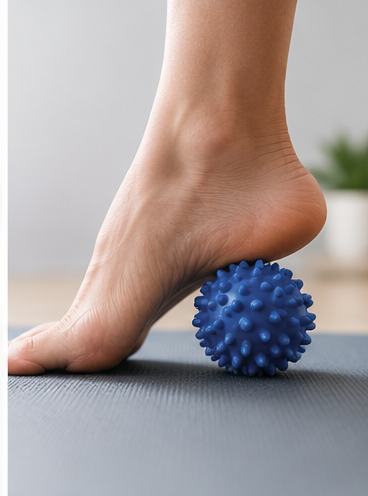
Most patients with plantar fasciitis can dramatically reduce pain with three simple changes. Daily plantar fascia stretching, especially first thing in the morning before you stand up. Switching out unsupportive shoes like worn flats, flip-flops, or thin dress shoes for shoes with real arch support. And temporarily cutting back on whatever activity is most aggravating the pain.
We give you specific stretches to do at home and we will often examine your current shoes and tell you what to look for in your next pair.
2. Taping, night splints, and short-term anti-inflammatory care
If the simple changes are not enough, we add support. Athletic taping or KT tape gives your foot temporary structural support during the day. A night splint keeps your foot in a slight stretch overnight so you do not wake up to that morning shock of pain. Short courses of anti-inflammatory medication help calm the irritated tissue while the other steps go to work.
3. Custom orthotics
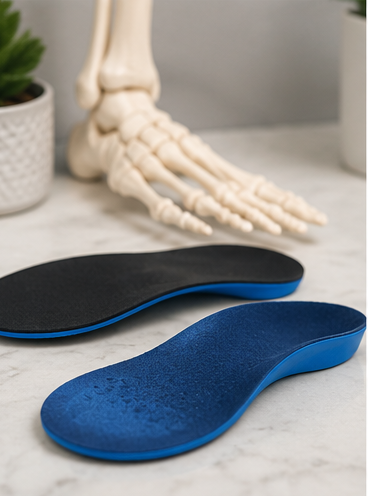
This is the rung where most patients get real relief. Custom orthotics for plantar fasciitis are designed to support your specific arch, control how your foot moves under load, and take the strain off the plantar fascia. They are different from the drugstore inserts you have probably already tried. Custom orthotics are Dr. Udall's specialty, and they solve plantar fasciitis for a remarkable number of patients who thought they were stuck with the pain.
Hyperlink: "Custom orthotics for plantar fasciitis" links to /services/custom-orthotics/
4. Injections and advanced options
For patients whose pain has not responded to the first three steps, we have additional options. Corticosteroid injections can break a stubborn cycle of inflammation. We also discuss other advanced options when they are the right fit. Most patients who reach this rung still avoid surgery.
5. In-office or surgical intervention
Surgery for plantar fasciitis is rare. The vast majority of cases resolve with the steps above. When surgery is genuinely needed, Dr. Udall is fellowship trained to perform it, with hospital privileges at St. Joseph's Westgate Medical Center. But we exhaust everything else first.
Heel Spurs and Plantar Fasciitis
A heel spur is a small bony growth on the underside of the heel bone. They show up on X-rays in a lot of plantar fasciitis patients, and they used to get blamed for the pain. We know now that the spur itself is usually not the source of the pain. The pain comes from the inflamed plantar fascia. Treating the plantar fasciitis treats the pain, and the spur usually becomes irrelevant.
Some heel spurs do cause pain on their own. We figure out which kind you have during your exam and, when needed, with an in-office digital X-ray.
How Long Does Plantar Fasciitis Last?
The honest answer is that it depends on how soon you start treating it and how consistent you are with the treatment. Patients who catch it early and commit to the basics, like stretching, supportive shoes, and orthotics, often see significant relief in 4 to 8 weeks. Patients who have been dealing with it for months or years before getting help typically need 3 to 6 months for full resolution.
The pages you find online that promise to cure plantar fasciitis in a week are not telling you the truth. Real recovery takes consistency, and the longer you have had the pain, the longer it takes to undo. The good news is that almost every patient who follows through does fully recover.
The Best Shoes for Plantar Fasciitis
The short version: a good shoe for plantar fasciitis has real arch support, a firm heel counter that does not collapse when you press the back, a mild rocker sole that helps your foot roll forward, and some shock absorption in the heel. Anything without those features is the wrong shoe for you while you are healing. That rules out worn flats, flimsy slip-ons, flip-flops, most fashion sneakers, and dress shoes with no support.
For our patients in Arizona, where sandal season is most of the year, the standard flat flip-flop is one of the worst things you can wear with a heel that hurts. Supportive sandals exist, including brands like Birkenstock, Vionic, and Oofos, and they are a meaningful upgrade over a flat rubber sole. We will often recommend a few specific shoes during your visit based on what you actually wear day to day.
Frequently Asked Questions About Plantar Fasciitis and Heel Pain
How long does plantar fasciitis last?
It depends on how soon you start treating it and how consistent you are. Patients who catch it early often see major relief in 4 to 8 weeks. Patients who have been dealing with it for a year or more typically need 3 to 6 months for full resolution.
What does plantar fasciitis feel like?
A sharp, stabbing pain on the bottom of the heel, especially with the first few steps in the morning or after sitting for a while. The pain often eases with movement but returns later in the day after time on your feet.
Will I need surgery?
Almost certainly not. Surgery for plantar fasciitis is rare. The vast majority of cases resolve with stretching, supportive shoes, custom orthotics, and other conservative steps.
Can I run with plantar fasciitis?
Usually not while it is at its worst. We recommend cross-training, such as swimming, cycling, or light strength work, during the acute phase. Then a gradual return to running once the pain has settled down and you have the right footwear and orthotics in place.
Are night splints worth it?
Yes, for most patients. They keep the fascia in a slight stretch overnight, which is why so many patients with night splints do not wake up to that morning shock of pain.
Does insurance cover plantar fasciitis treatment?
Yes. Most major insurance plans cover the exam, imaging, and most treatments. Custom orthotic coverage varies by plan, which is why we verify benefits before any work starts. We accept Medicare and most Medicare Advantage plans.
What is the difference between plantar fasciitis and a heel spur?
Plantar fasciitis is inflammation of the band of tissue along the bottom of the foot. A heel spur is a small bony growth on the heel bone. They often show up together on X-rays, but the spur is usually not the source of the pain. Treating the fasciitis is what fixes the pain in almost every case.
¿Habla español?
Sí. Dr. Udall y nuestro equipo hablan español con fluidez. Llame al 623-335-4017 para programar una cita.
Related Conditions We Treat
Custom Orthotics
Same-week relief for painful or infected ingrown toenails. Permanent solutions, gentle technique, and we’ll get you out of pain fast.
Bunions
From mild bunions to advanced cases, we start with conservative care — footwear, padding, custom orthotics — and only consider surgery when nothing else has worked.
Flat Feet
Custom orthotics, supportive bracing, and conservative care for flat feet (pes planus). Veteran and Luke AFB community welcome.
Drop Foot
Diagnosis, AFO bracing, and rehabilitative care for drop foot. We figure out the cause and build a plan — conservative care first.
Foot & Ankle Injuries
Sprained ankle, foot fracture, sports injury, or stress fracture? Same-week visits, in-office digital X-ray, and a plan to get you back to activity.
Foot & Ankle Pain
Not sure what’s wrong? Our foot pain triage page helps you identify what you’re feeling — top-of-foot, ball-of-foot, arch, or ankle pain.
Book Your Custom Orthotic Evaluation
The first step to custom orthotics is a real evaluation. Dr. Udall will examine your feet, watch you walk, and tell you whether custom orthotics are likely to help with your specific problem. If they are not the right answer, we will tell you that too.